


Artemis II proximity operations
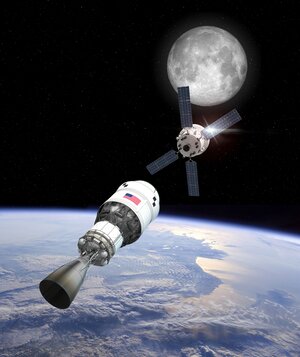
Artist impression of Artemis II: Orion and its European Service Module as they separate from the second stage of NASA's Space Launch System rocket, the Interim Cryogenic Propulsion Stage (ICPS). This will happen a little over 3 hours into the mission.
After separation, the crew will take manual control of Orion and perform a proximity operations demonstration using the European Service Module's engines to adjust their position with extreme precision - they will navigate towards, around and away from the ICPS to practise docking manoeuvres that will be used for future Artemis missions, for example connecting ESA's Lunar I-Hab habitation module to the Gateway lunar station during the Artemis IV mission. After the demonstration, the ICPS will fall into the atmosphere and burn up.
Orion will continue its high Earth orbit, where the crew will check all systems. Around 25 hours into the mission, mission control will give the go for the trans-lunar injection burn - the European Service Module's main engine will fire a powerful burn to send Orion and the crew towards the Moon.
The European Service Module is the powerhouse of the Orion spacecraft that will ferry astronauts towards the Moon and back during Artemis II. Our module provides life support for the astronauts - air, water, and a comfortable temperature - as well as electricity with its four solar arrays and propulsion through space with its 33 engines.
Built by European industry led by ESA, the European Service Module is assembled by prime contractor Airbus in Bremen, Germany, with contributions from more than 20 companies across 10 European countries.

Artemis II proximity operations

Artemis II: rocket second stage separation
Artemis I second stage separation

European Service Module-2 for Artemis II
