


CM25 – Protect our planet and climate
Our beautiful blue planet can be vulnerable to change – using satellites we can monitor the environment to help policymakers plan for the future. Our orbital environment also needs protection so that future missions can fly safely.
On the ground and in space, we watch for asteroids or comets that could one day collide with Earth and we are developing technology to mitigate these threats.

Access the video
Protecting our planet starts with understanding it
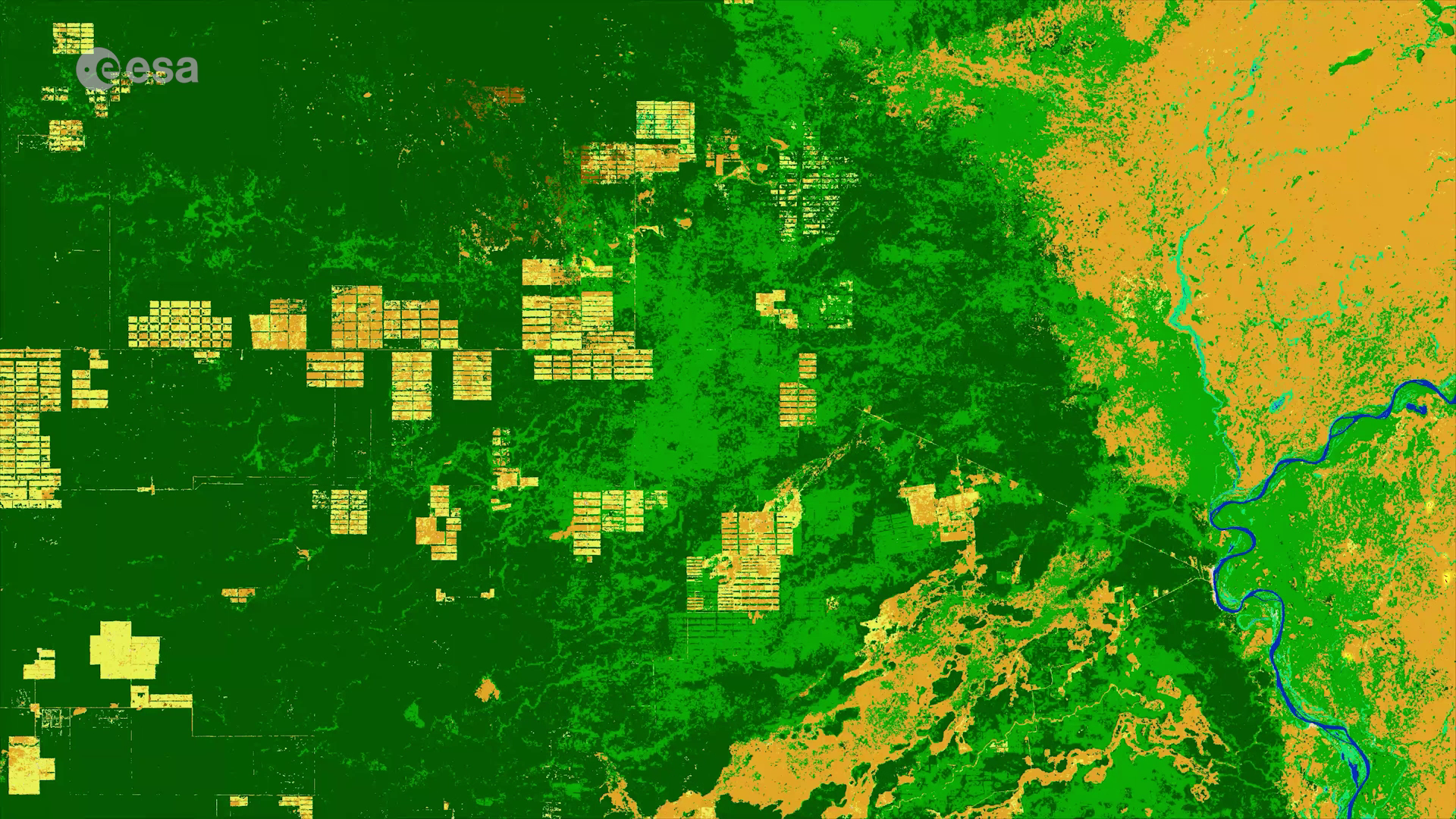
Earth observation has a key role to play in protecting our planet. Satellites deliver the data that scientists use to understand our planet and advise our decision makers. High-performance computing can also help us to model natural processes into the future and forecast the impact actions we take might have.
Earth observation is seeking funding for FutureEO, Digital Twin Earth, Copernicus and InCubed3 this year. Future EO supports the development of new missions, along with teams funded by ESA’s Basic Activities, which all Member States subscribe to. FutureEO also ensures that data from ESA Earth science missions is kept securely and available to researchers. These missions including the newly selected Wivern, and upcoming Harmony mission, pioneer instruments in space and prepare for long-term monitoring missions. This information is also crucial to Earth Action, the part of FutureEO where climate data is used to support behavioural change in support of the climate and environment.

Digital Twin Earth complements the European Commission’s Destination Earth initiative and uses data and advanced modelling to project how certain actions could affect the planet. Earth’s ‘twin’ can be programmed to reflect processes in real time and will further develop European skills in high-performance computing, predictive AI, and data-based decision making for Earth.
Copernicus is the world-leading Earth observation satellite system, led by the European Commission in partnership with ESA. The upcoming stage of this programme will be the next-generation Sentinel-2 and Sentinel-3 satellites to maintain and enhance monitoring of our planet.
Making space activities sustainable

Since the first launch to space in 1957, thousands of objects have been sent into low Earth orbit, and that number is increasing rapidly this decade. The time has come to clean Earth’s orbit of the many objects that no longer work and to commit to reducing pollution of this finite resource. Even a small fleck of paint moving at orbital speed can damage a working satellite, or pose a risk to astronauts living and working in low Earth orbit. It is also important to reduce the overall environmental footprint of space missions. These considerations are all part of ESA’s Space Safety Programme.
ESA is working on the Rise mission with the commercial company D-Orbit to demonstrate that it is possible to approach and dock with a satellite on orbit – opening up the route to on-orbit servicing. Engineering of this type of mission is difficult, and it is also important to ensure that these capabilities are never used to interfere with a satellite without the owner’s permission.
For those objects that cannot be serviced or recycled in space, ESA is working on a de-orbiting kit – important technology to take obsolete satellites out of the way. ESA is also working on AI-assisted space traffic management and further tracking an analysis of space debris to protect the planet’s orbital shells.
Threats from the space environment
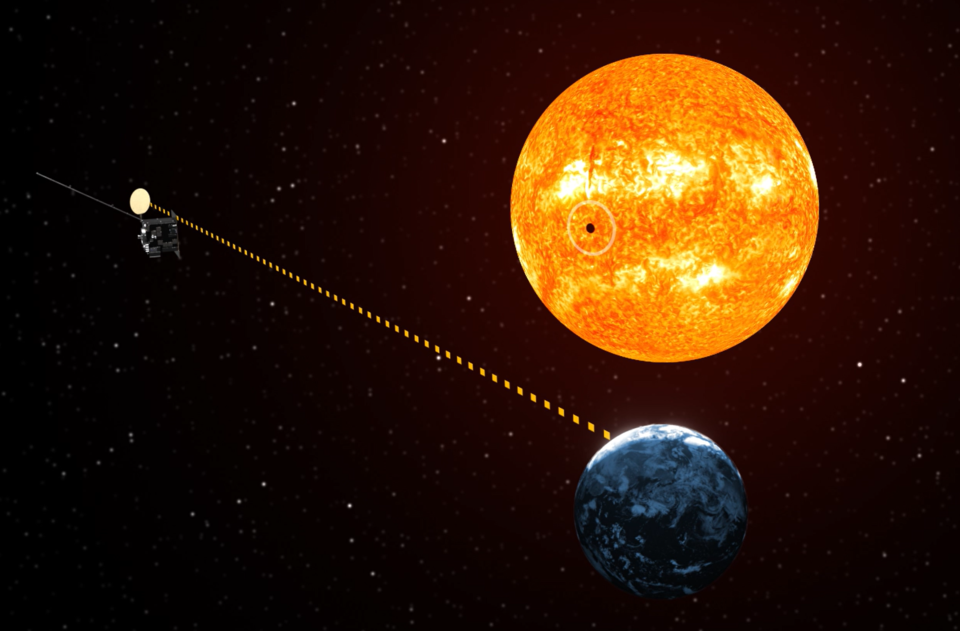
Our Sun is endlessly fascinating – and is being studied by space missions as well as from the ground. But sometimes living with a star can be dangerous – although Earth’s magnetic field usually deflects the solar wind and mass ejections from the corona, we need to have warning of big events. The Vigil mission will supplement our current space weather warning systems and give everyone on Earth – and in space – a chance to prepare for incoming solar storms. The Aurora mission and a group of nanosatellites will study space radiation and magnetic fields to help us understand how best to protect our planet.
The international community works together on ‘planetary defence’ to identify any asteroids or comets that might be at risk of colliding with Earth. Multiple observations are required to be certain of an asteroid’s orbit, but the proposed NEOMIR space telescope would speed up the process to rule out any impact hazard. Understanding and altering asteroids’ orbits could one day save the planet – with this in mind, ESA is proposing the Ramses mission to fly by the asteroid Apophis when it comes close to Earth in 2029. This mission will build on the knowledge gained from the Hera mission, currently en route to the Didymos asteroid system.
Wherever our future exploration may take us, Earth is our home planet and needs our respect and protection.